If you live in Brevard County, you already know what Florida weather does to a house. Heat, humidity, frequent rain, and, closer to the water, salt air all give mold, mildew, and algae plenty of chances to settle on siding, roofs, pavers, and screens. A pressure washer can look like the fastest fix, and on the right surface it is a useful tool. On the wrong one, it can etch concrete, strip paver sand, scar stucco, or tear a screen.
These pressure washing tips are meant to help Space Coast homeowners clean more carefully and know when a softer method, or a professional, is the better choice.
Pressure Washing vs. Soft Washing
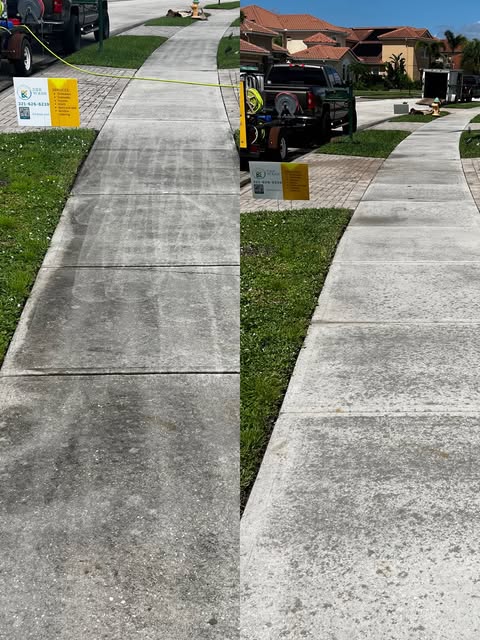
Pressure washing uses a strong stream of water to lift dirt and loose buildup from durable hard surfaces. It is generally a good fit for concrete driveways, sidewalks, many patios, and some paver areas when the pressure, tip, and technique are controlled.
Soft washing uses much lower pressure and an appropriate cleaning solution to loosen organic growth so it can be rinsed away without blasting the surface. This is the safer approach for roofs, stucco, painted siding, and screen enclosures. High pressure on those materials can drive water under shingles or behind stucco, pit the finish, or tear screen mesh.
If a surface is vertical, painted, or relatively delicate, start with the gentler method. If you are unsure, treat it as a soft-wash job until you know otherwise. Starburst uses house washing and soft washing on walls and siding, and a lower-pressure approach for roof cleaning.
Why High PSI Can Damage Your Home
PSI, or pounds per square inch, is only part of the story. The nozzle, distance, and how long you stay in one spot matter just as much. A narrow tip held close can damage a surface even at a moderate setting.
Pavers
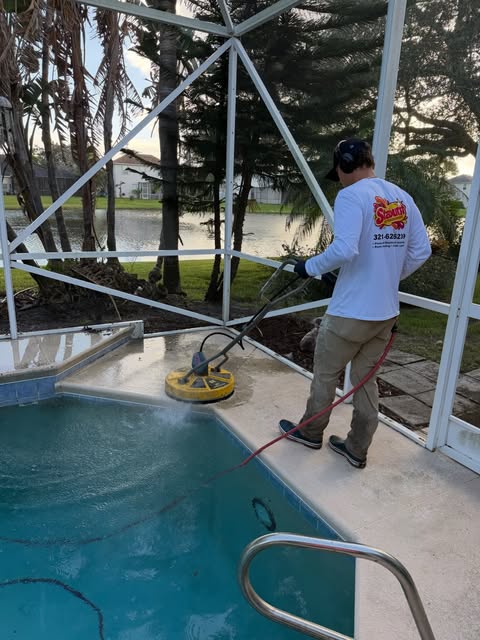
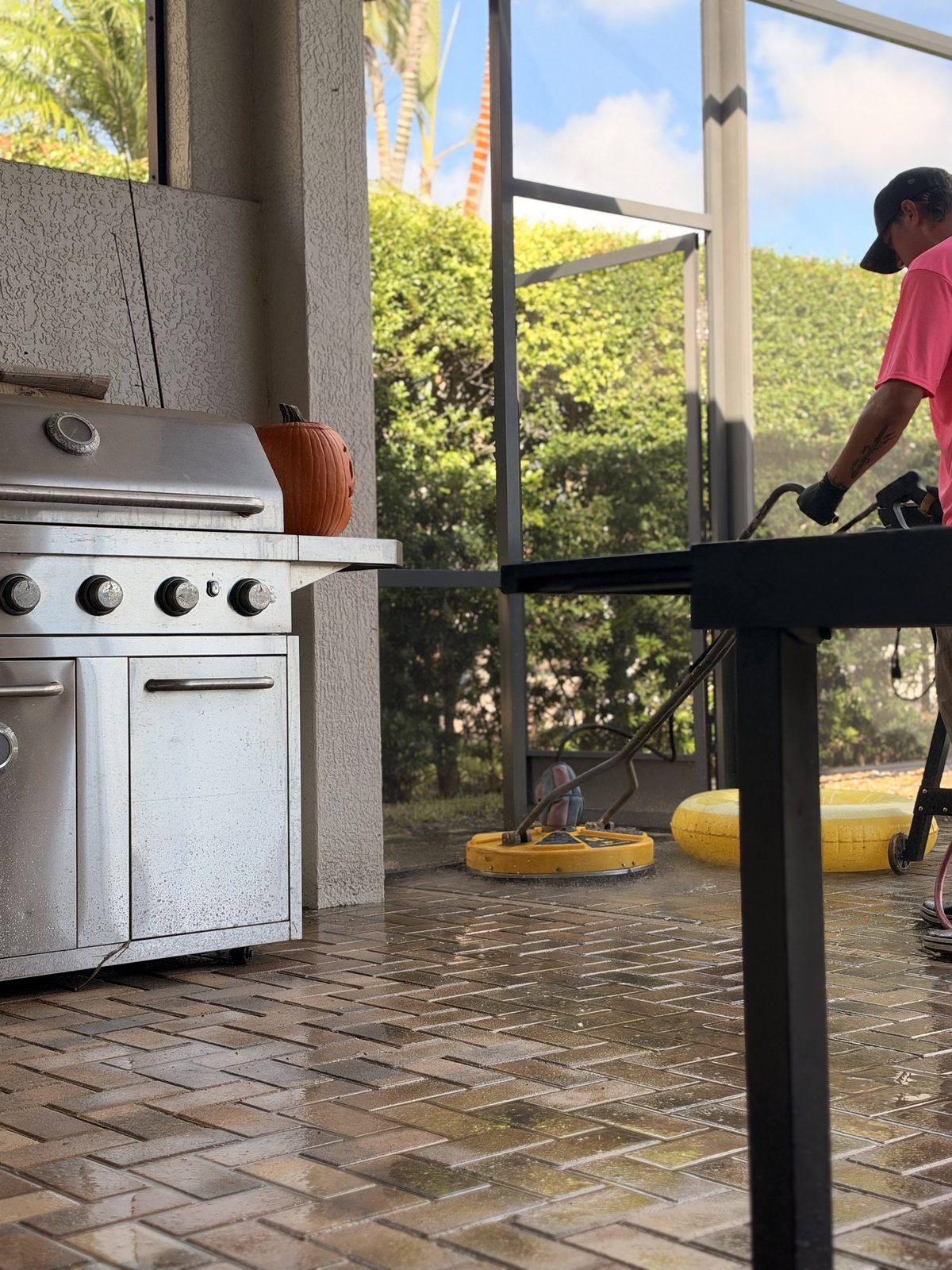
Pavers are durable, but the sand in the joints is not. A high-pressure wand can blow that sand out, loosen the pavers, and leave wand marks. A surface cleaner, the flat spinning disc often used on driveways and lanais, spreads pressure more evenly and is usually kinder to the joints.
Wood
Decks, fences, and painted wood trim can fuzz, splinter, or lose their finish under a strong stream. Keep the pressure low, work with the grain, and stay farther back than you might on concrete.
Stucco
Stucco and other textured finishes can be pitted or opened up by a pressure wand, which lets moisture in. Soft washing is the usual choice for these wall materials.
Screens
Screen enclosures and pool cages are common on the Space Coast and easy to damage. High pressure can stretch or blow out mesh and bend the frame, so clean screens with low pressure and a gentle cleaner.
Florida Mold, Mildew, Algae, and Humidity
The green, black, or dark streaks on a Brevard roof, north-facing wall, or shaded patio are often living growth, not just dirt. Florida’s humidity and frequent rain give mold, mildew, and algae plenty of moisture, especially in shade, under irrigation overspray, or near plants that stay damp.
Blasting growth off with high pressure can make a surface look cleaner for a little while, but it may not reach what is in the pores of the material, and it can scar the surface. A cleaning solution applied at low pressure is generally more effective on organic growth and easier on roofs, siding, and screens. Afterward, keeping gutters clear, trimming plants back, and adjusting sprinklers can slow the return.
How Often to Clean in Brevard’s Climate
There is no single schedule that fits every home. Shade, irrigation, nearby vegetation, roof and wall materials, and how close you are to the river or the ocean all affect how quickly buildup returns. A driveway, entry, or lanai often needs attention sooner than a sunny, open wall.
Walk the property a few times a year and clean when you start to see consistent discoloration, slippery pavers, or growth on the roof or siding. Oceanfront and riverfront homes may also see more salt and mineral film on glass, which is a good reason to pair exterior cleaning with window care.
Protect Plants and Pets Before You Start
Plan for the landscape and for any animals around the house.
- Move pets, food bowls, and outdoor toys out of the work area until surfaces are rinsed and dry.
- Water plants, shrubs, and grass thoroughly before applying any cleaning solution, and rinse them again afterward. Wet foliage is less likely to take up product.
- Cover sensitive plants that sit against a wall or along a paver edge being treated.
- Keep runoff away from ponds, vegetable gardens, and pet areas, and store cleaners out of reach of children and pets.
- Read the product label. A stronger mix is not always a better one.
Paver Sand and Sealing After Cleaning
If you pressure wash pavers, expect some joint sand to come out, even when you are careful. That sand is what keeps the pavers locked in place. After the surface dries, the joints usually need to be refilled with the right paver sand and compacted so the pavers do not shift.
Sealing should only happen after the pavers are clean, the joints are filled, and the surface is fully dry. A sealer can help the color look richer and add a layer of protection, but sealing dirty pavers or damp joints can trap residue or cause a cloudy finish. If you plan to clean and seal, it helps to treat paver cleaning and sealing as one process.
Stay Safe on Ladders and Roofs
A clean roof is not worth a fall. Florida roofs, especially tile, can be brittle, slippery when wet, and easy to crack. Walking a wet roof with a pressure wand is a common way to break tiles, drive water under the roofing, or lose your footing.
Use a stable ladder on firm, level ground, and have someone spot you if you are working at height. Stay off the roof if you do not have the right footwear, fall protection, and experience. Second-story walls, gutters, and roofs are often better left to a crew that can reach them safely.
When to Call a Professional
Some jobs are well within a careful homeowner’s reach, such as a small concrete walk or a ground-level patio with the right tip and patience. Call a professional when the work involves a roof, a second story, stucco or other delicate finishes, a full screen enclosure, heavily soiled pavers that need to be re-sanded and sealed, or any situation where you would need a ladder on uneven ground.
Starburst Exterior Cleaning serves homes and businesses throughout Brevard County and Florida’s Space Coast. Request a quote or call (321) 878-8194, and we will look at the surfaces on your property and recommend the right method before any work begins.
Need a Free Quote?
Serving homes and businesses across Brevard County.