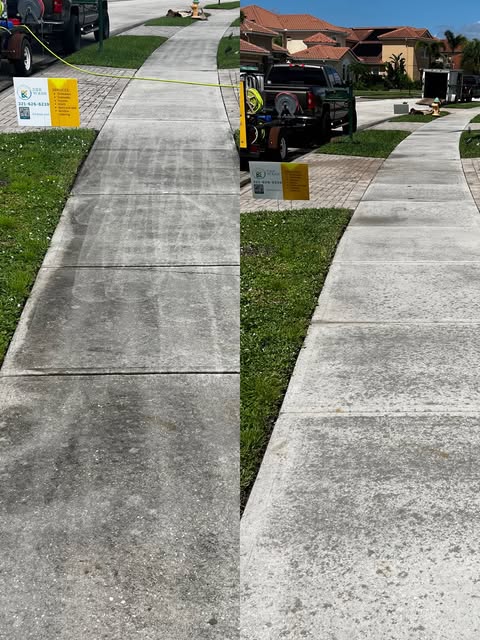
If you’ve ever looked down at your sidewalk or driveway and wondered when it turned so gray, you’re not alone. Here on Florida’s Space Coast, concrete has a way of quietly darkening month after month until one day it looks years older than the rest of your home. The photo above is from one of our recent jobs in Brevard County: a stretch of concrete sidewalk beside a lawn, shown before and after cleaning. On the left, the slabs are blotchy and dark with grime. On the right, the same walk is evenly bright from one end to the other.
Here’s what causes that buildup, why it matters more than you might think, and how to keep your concrete looking its best between professional cleanings.
Why Concrete Turns Dark in Brevard County
Concrete looks solid, but it’s actually porous. Tiny pores and capillaries run through every slab, and they soak up whatever lands on them. In our warm, humid climate, a few culprits do most of the damage.
Mold, mildew and algae
Between afternoon storms, morning dew and sprinklers, Space Coast concrete rarely stays dry for long. That moisture, plus heat and shade from trees or the house, gives mold, mildew and algae a perfect place to grow. They usually show up as dark gray, black or greenish patches, often worst along the edges where the concrete meets the grass and stays damp the longest.
Dirt, pollen and runoff
Rain splashes soil from flower beds and lawns onto the surface, and pollen and leaf debris settle into the pores. Over time, this layer of organic material becomes food for more growth, so the staining feeds itself.
Rust, oil and tire marks
Driveways pick up extra stains from vehicles, and well water from irrigation can leave orange rust streaks. These need different treatments than mildew, which is one reason a one-size-fits-all approach doesn’t always work.
Why It’s Worth Keeping Concrete Clean
Clean concrete isn’t just about looks, although a bright sidewalk and driveway does wonders for curb appeal. There are practical reasons too:
- Safety: Algae and mildew can make concrete slick, especially after a rain. Walkways and pool decks are where most slips happen.
- Longevity: Organic growth holds moisture against the surface. Keeping it clean helps your concrete age better.
- HOA expectations: Many neighborhoods across Brevard have rules about keeping driveways and sidewalks free of visible mildew. A regular cleaning keeps you ahead of any friendly reminder letters.
- Selling or renting: Driveways and front walks are among the first things buyers and guests see. Fresh concrete makes the whole property look cared for.
How Professional Concrete Cleaning Works
Concrete is one of the tougher surfaces around your home, so it can handle higher pressure than siding, screens or stucco. But “tough” doesn’t mean you should blast it carelessly. The right method makes a big difference in the finished result.
Surface cleaners for even results
If you’ve ever seen concrete with light and dark stripes or swirls after a cleaning, that’s usually from a handheld wand moved unevenly across the surface. A surface cleaner is a spinning, round attachment that holds the nozzles at a consistent distance from the concrete, so the whole slab gets cleaned evenly. That’s how you get the uniform, streak-free look you see on the right side of our photo.
Pre-treating and post-treating
Pressure alone removes what’s on top, but mold and mildew can live down in the pores. Applying a cleaning solution before washing helps loosen growth, and a post-treatment afterward helps kill what’s left behind so it doesn’t come back as quickly. This step is a big part of why a professional cleaning tends to last longer than a quick rinse.
Protecting your lawn and landscaping
Sidewalks and driveways sit right next to grass and plants, as you can see in the photo. A careful crew pre-wets and rinses nearby landscaping and pays attention to where the water runs so your yard stays healthy while the concrete gets clean.
DIY Tips Between Cleanings
You don’t need to pressure wash every weekend to keep concrete looking good. A few simple habits go a long way:
- Sweep or blow it off regularly. Removing leaves, pollen and dirt takes away what mildew feeds on.
- Adjust your sprinklers. If sprinkler heads hit the driveway or walk every day, that constant moisture (and possible rust from well water) speeds up staining. Aim them back at the lawn.
- Trim back overhanging plants. More sun and airflow means the concrete dries faster after rain.
- Wipe up oil spills quickly. Fresh drips are much easier to deal with than stains that have soaked in for months.
- Be careful with rented pressure washers. Holding a narrow tip too close can etch the surface and leave permanent marks. If you’re unsure, it’s better to call a pro.
How Often Should You Clean Concrete on the Space Coast?
It depends on your property. Shaded driveways, walkways next to irrigated lawns and north-facing areas tend to darken faster than concrete that gets full sun all day. As a general rule, it’s a good idea to take a look at your concrete at least once a year and schedule a cleaning when you start to see dark patches or slick spots. Many homeowners like to pair it with a house soft wash so the whole exterior looks fresh at the same time, especially before the holidays when family is visiting.
If your property has pavers instead of plain concrete, the process is a little different, since joint sand and sealing come into play. Our paver cleaning and sealing service covers those surfaces.
Let Us Brighten Up Your Concrete
Whether it’s a front walk, a long driveway or a pool deck, our team at Starburst Exterior Cleaning would love to help bring your concrete back to life. Learn more about our pressure washing service, reach out through our contact page, or give us a call at (321) 878-8194 for a free quote. We’re happy to help you get your Space Coast home looking bright again.
Need a Free Quote?
Serving homes and businesses across Brevard County.